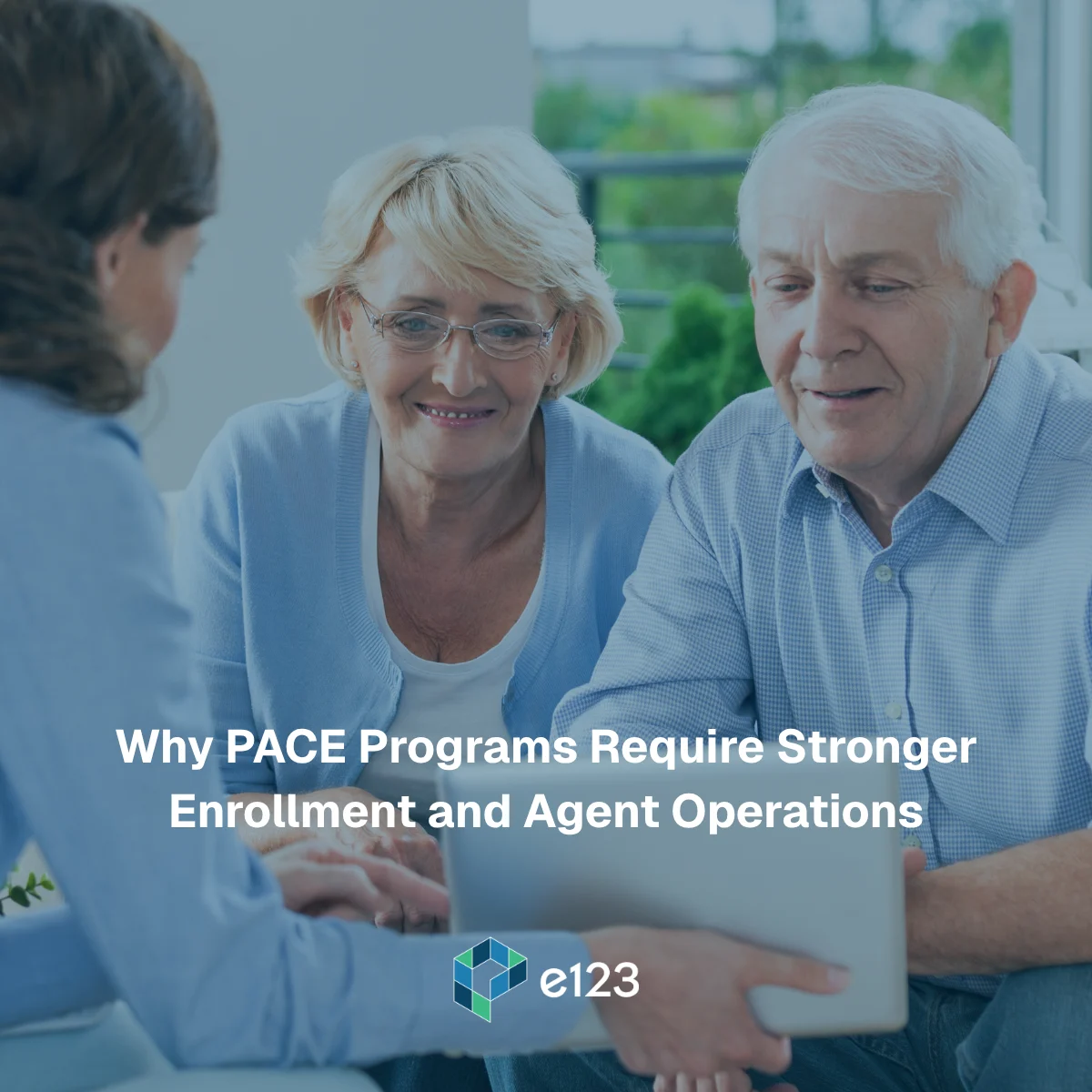

 PACE programs serve some of the most complex populations in health care.
The Program of All-Inclusive Care for the Elderly helps eligible older adults receive coordinated medical and social services while continuing to live in the community when possible. CMS notes that most PACE participants are dually eligible for both Medicare and Medicaid, making the model deeply dependent on care coordination, accurate eligibility, and operational precision.
That complexity is exactly why the systems behind PACE growth matter.
For health plans and organizations supporting PACE, the challenge is not only delivering care. They must also manage the operational path that helps eligible individuals, families, providers, agents, and partners understand and access the program.
When that path is unclear, growth becomes harder to manage.
PACE Growth Requires More Than Program Awareness
PACE is not a simple product to explain.
It serves a specific population. It requires eligibility review. It involves Medicare and Medicaid coordination. It often includes families, caregivers, providers, community partners, and enrollment teams in the decision-making process.
That means the enrollment journey can be more consultative than transactional.
People need guidance. Agents and partners need accurate information. Internal teams need visibility into where prospects are in the process. Leaders need to understand which markets, partners, and referral sources are driving enrollment.
When those pieces are managed manually, the process becomes fragile.
A missed follow-up, unclear eligibility status, outdated agent record, or disconnected enrollment update can create avoidable friction for everyone involved.
Agents and Partners Need Clear Support
PACE programs often rely on trust-based education.
Whether the conversation begins with an enrollment representative, provider, community organization, or family member, the people supporting that journey need clear and accurate information.
They need to understand:
- Who is eligible
- How the enrollment process works
- What information is required
- Where each prospective participant stands
- Who to contact when questions come up
- How activity is tracked and reported
Without that support, partners may hesitate to promote the program. Enrollment representatives may struggle to explain the details confidently. Internal teams may spend too much time answering repeat questions or cleaning up disconnected information.
For PACE growth, partner confidence matters.
Making the program easier to understand and support helps organizations expand more responsibly.
Operational Precision Builds Trust
PACE serves individuals who often have significant health and social needs.
That makes trust essential.
Families and caregivers need clear explanations. Participants need confidence that their needs will be understood. Enrollment teams and partners need confidence that the information they are sharing is accurate.
Behind the scenes, that trust depends on operational precision.
Enrollment data must be reliable. Agent and partner records need to be current. Communications should be consistent. Reporting should be visible. If compensation or referral-related processes apply, they need to be managed carefully and transparently.
When the operational foundation is weak, confusion can build quickly.
When it is strong, teams can spend less time managing exceptions and more time helping people access the care model that may be right for them.
Manual Processes Can Hold PACE Programs Back
Many organizations can manage early PACE growth with manual processes.
A spreadsheet for partner activity.
A shared inbox for enrollment questions.
A few internal experts who know how everything works.
A manual report before leadership meetings.
That may work at low volume, but it becomes harder as the program expands across markets, partners, and service areas.
Manual processes make it harder to see where growth is coming from, making it harder to identify bottlenecks and support agents and partners consistently. They also create more risk when key knowledge lives with a few people instead of inside a reliable system.
PACE growth requires a more durable operating model.
e123 Helps Support the Infrastructure Behind PACE Growth
e123 understands the complexity behind PACE, Medicare Advantage, Medicaid, D-SNP, and integrated care markets.
We know that growth in these environments depends on more than outreach. It depends on the systems behind enrollment, agent and partner support, compliance, reporting, and operational visibility.
Through Abacus, e123 helps organizations manage the infrastructure behind complex growth models, including onboarding, licensing and appointment workflows, hierarchy management, enrollment visibility, commission administration, compliance support, and reporting.
For PACE programs, that means stronger operational control, clearer data, and better support for the people responsible for helping eligible individuals understand their options.
PACE growth is built on trust, and the right infrastructure helps protect it.
If your organization is expanding PACE or supporting integrated Medicare and Medicaid growth, e123 can help you build the agent, partner, enrollment, and reporting infrastructure needed to grow with confidence.